Costs Are Too High: What Can the U.S. Do to Close the Gap?
American electricity demand, driven by advanced manufacturing, data centers, and electrification, is outpacing supply and leaving consumers and industries with a grid that is being asked to do more than it can.
To keep up, the U.S. must expand the infrastructure that brings electricity to consumers.
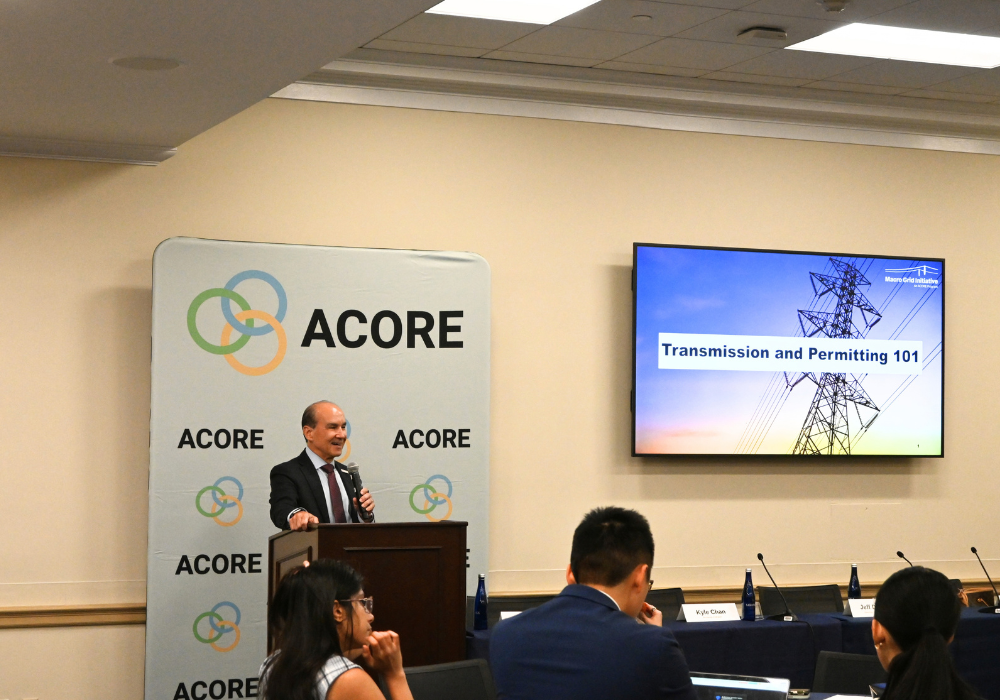
At a recent United States Energy Administration (USEA) and ACORE briefing for congressional staff, panelists agreed that smart grid expansion will benefit economic development, affordability, national security, and resilience – and that thoughtful policy change is necessary to facilitate that rapid expansion.
Mark Menezes, President and CEO of USEA, kicked off the briefing by highlighting that Congress has worked for decades to get this right, most recently with the Energy Policy Act of 2005, and today’s bipartisan momentum offers an opportunity to act on the grid and create the predictable policy environment we need.
What is the real cost of today’s energy?
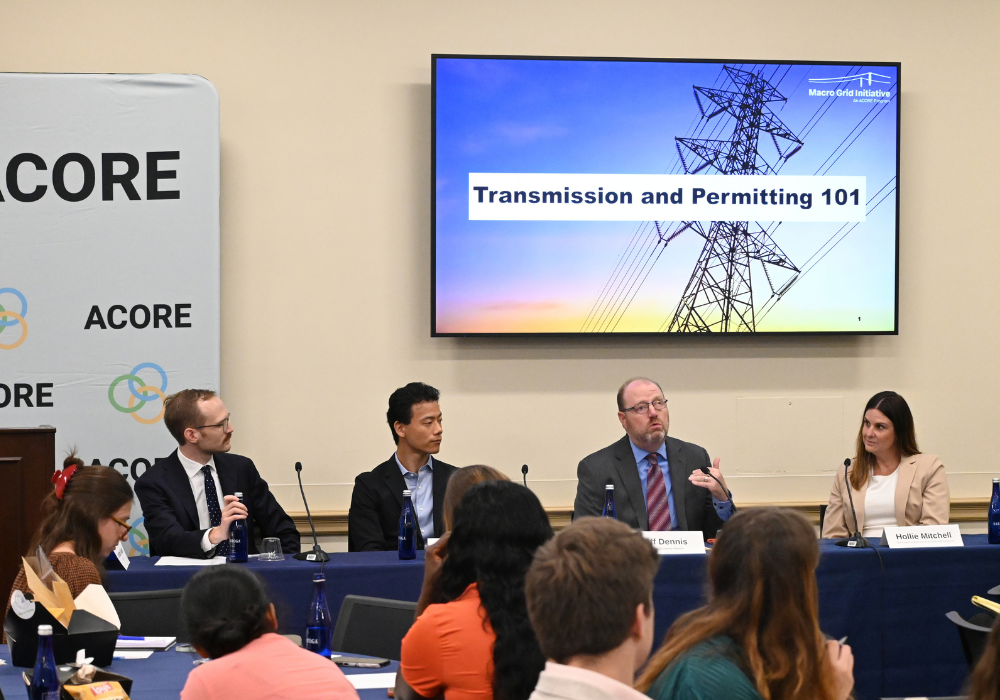
Jonathan Geldof from ACORE moderated the first panel which highlighted the high cost of a failing grid.
Hollie Mitchell from Steel Dynamics discussed how important energy access is to steel manufacturing. For the steel industry, no power means no plant. When a steel manufacturing company scouts out a site for a new facility, it asks whether the grid can supply that power. If it can’t, the answer is an immediate no.
Jeff Dennis from the Electricity Customer Alliance highlighted the importance of regional and interregional transmission build out for both economic and national security. He also spoke to affordability. His new report shows that expanding the U.S. grid can save electricity customers up to $15.3 billion.
How are other countries leading the way?
Economic competitiveness was another theme during the discussion. China has built out its grid efficiently with clean energy leading the way—evidence that supply can keep pace with demand. The difference between the United States and China is strategy. Kyle Chan from Brookings, emphasized that China treats its grid as a driver of economic growth and builds ahead of need. Meanwhile, the U.S. tends to “coast on what they have built,” adding capacity piecemeal after congestion becomes a problem, like patching a leaking basement.
Where can we go from here?
The second panel, moderated by Alisa Fox from ACORE, featured Casey Kelley from ClearPath, Marc Levitt from Breakthrough Institute, and Liza Reed from the Niskanen Center, who all turned to how the policy can support the grid build out we need; specifically, more high voltage transmission and more advanced transmission technologies (ATTs).
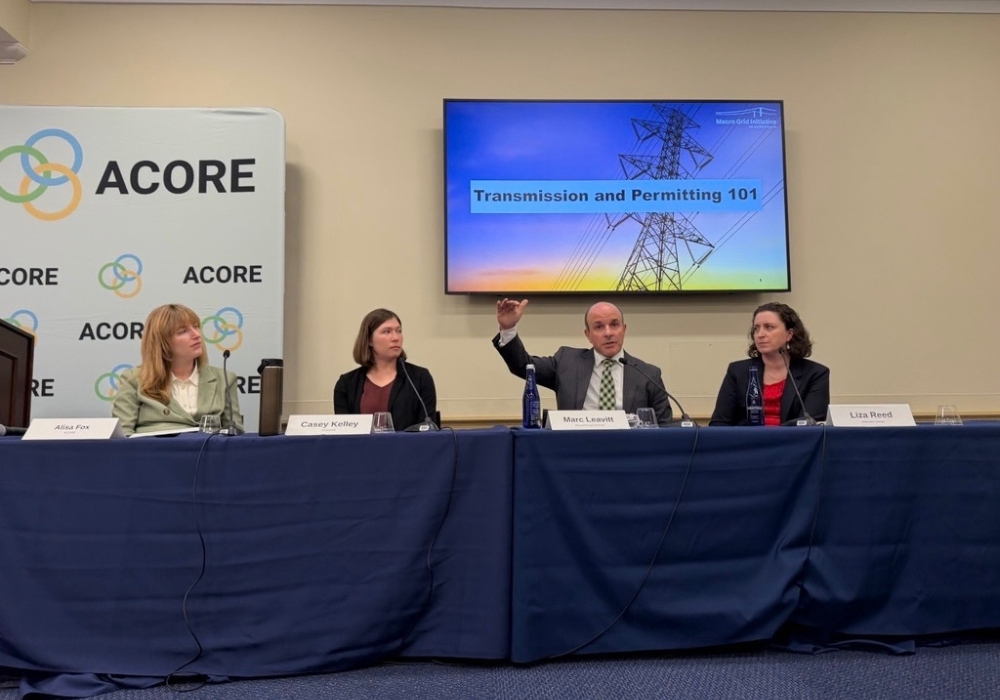
To build regional and interregional lines, we need to update our siting, planning, and cost allocation policies. We also need a more formal interregional planning mechanism, like what is in place for regional transmission, as well as permitting reform and permitting certainty. Transmission lines have stalled for as long as 17 years and undergone multiple rounds of environmental review and subsequent litigation under laws like the National Environmental Protection Act (NEPA) and National Historic Preservation Act (NHPA).
Deploying more ATTs, which can cost effectively and rapidly build capacity on the existing grid, requires better evaluation and incentives.
The Takeaway
Demand isn’t waiting. There are many solutions that the U.S. can consider, such as passing permitting reform, creating an interregional planning mechanism, and encouraging the deployment of ATTs. We are encouraged by the bipartisan effort happening in Congress to work towards some of these solutions.
Author

ACORE Team Member
Join leaders from across the clean energy sector.

What will our next 20 years look like? Here’s the truth: they’ll be better with ACORE at the forefront of energy policy.
Shannon Kellogg
Amazon