When It Comes to Electricity Capacity, the Market is Telling Us the Story
The latest electricity capacity data from the U.S. Energy Information Administration highlights two stories about our electric grid: what’s happening now and what’s coming next.
The United States has more than 1.3 terawatts of operating electricity generation capacity as of July 2026 – more operating capacity than at any point in EIA data. More than half of the utility-scale electricity generating capacity operating on our grid today is made up of two sources: natural gas (39%) and coal (13%). That’s story one.
Story two looks at the planned capacity additions through 2028, for which we have more clarity than additions currently planned for 2029 and beyond. More than three-quarters of the capacity planned to come online over that time frame comes from two main sources: solar (49%) and storage (27%). In contrast, natural gas accounts for 15% of planned utility-scale capacity additions over the next two and a half years.
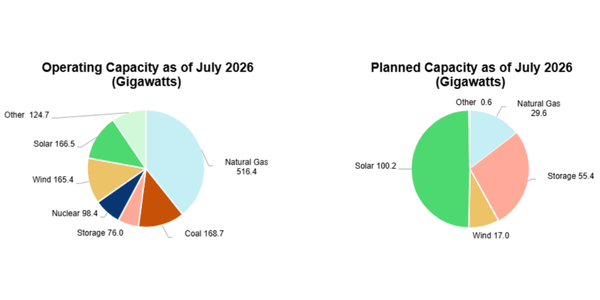
If we consider story two a sequel of story one, this is a pretty interesting plot twist: the near-term growth of the grid is overwhelmingly coming from clean power.
What’s most intriguing to me is that story two is being told by the market. Electricity demand is booming, and the businesses investing in the grid and building actual power plants are responding by planning more clean power additions.
This market enthusiasm is consistent with our survey-based analysis from earlier this year, showing that nearly 70% of the capital providers that invested over $1 billion in clean energy in 2025 plan to increase their investments in 2026. The Corporate Energy Buyers Association’s 2026 State of the Market Report showed corporate buyers announced 13 gigawatts of clean energy capacity in the United States in the first quarter of 2026, a pace that would break the existing annual record.
Why is the market leaning on clean power? Primarily because it can come online faster and it’s cost-competitive, so it makes sense the market would move that way.
Conventional energy sources will certainly remain significant components of the power grid. Natural gas still provides the largest share of U.S. electricity generation and more will be added over the next few years as electricity demand surges. However, the biggest game in town from a planning perspective is solar, wind, and batteries.
As we all try to read ahead in the story of how to meet our growing energy demands, the market is telling us how we can do it. The answer is clean power.
Author

ACORE Team Member
Join leaders from across the clean energy sector.

What will our next 20 years look like? Here’s the truth: they’ll be better with ACORE at the forefront of energy policy.
Shannon Kellogg
Amazon