Building Confidence in Dynamic Line Ratings: Lessons from the Field
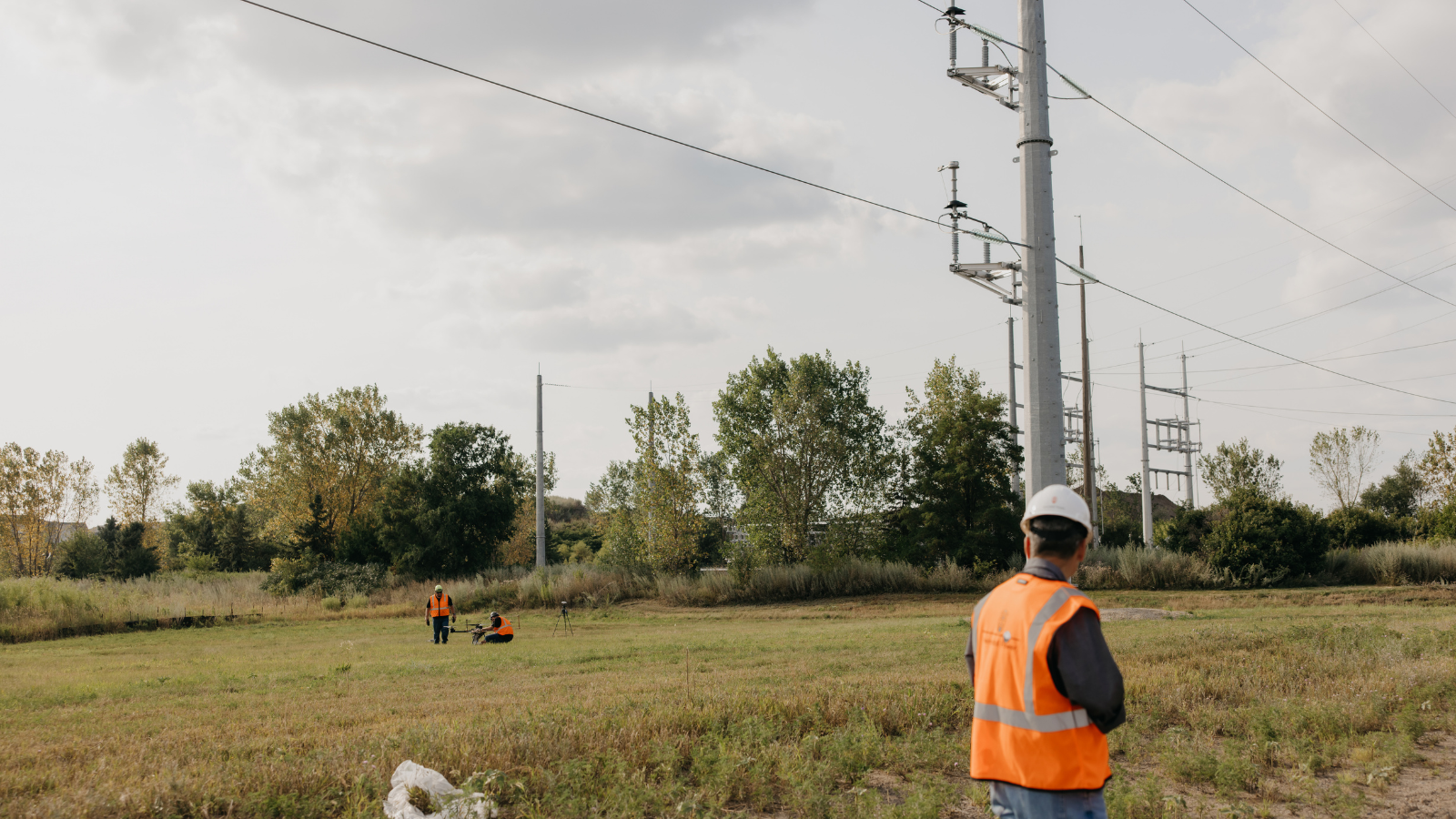
Last week, after the NARUC and NASUCA conferences in Minnesota, ACORE brought 40 regulators, consumer advocates, and transmission experts on a field trip to a Great River Energy (GRE) transmission field to see a dynamic line rating (DLR) demonstration. DLR uses real-world weather conditions—including temperature and wind—to dynamically adjust how much electricity a transmission line can safely carry. Dynamic line ratings are important because when the wind is blowing and/or temperatures are cooler, a line can carry more electricity, which increases available capacity and helps reduce congestion.
GRE began using DLR in 2023 and has been a vocal advocate for the technology ever since. As a bonus, Minnesota Power joined us onsite to share that it had installed DLR on its own power lines the week before. The utility highlighted how impressed it was that all 50 Neuron sensors, covering 200 miles of transmission, were installed in just four days.


Before the demonstration, participants asked questions to build familiarity and comfort with the technology. Demonstrations like this are important because hearing directly from utilities that have successfully deployed new technologies gives other utilities, regulators, and advocates greater confidence in adopting or requiring them. In a risk-averse industry where keeping the lights on is the top priority, everyone needs confidence in the technologies being deployed on the grid.

The installation of the equipment that enables DLR, called a Neuron sensor, took just one minute and 30 seconds (reading this blog takes longer!). Because the sensor was installed by drone, the line remained energized and there was no required downtime. We also got to see the equipment removed just as quickly.
Participants also saw Prisma Photonics technology, installed on GRE’s lines in 2025, which alerts operators to electrical faults, physical disturbances and severe weather conditions, with precise location information down to the specific tower. This enhances operators’ visibility into grid conditions and enables maintenance crews to respond more efficiently, reducing downtime and improving overall grid reliability.
In a white paper published with its DLR vendor, Heimdall Power, GRE analyzed 12 months of field-validated data and found that its monitored lines averaged 50.5% more capacity in the summer and 22.5% more in the winter—potentially saving $3.175 million in avoided congestion costs over five years. The data also compared DLR with ambient-adjusted ratings (AAR), which adjust line capacity based solely on ambient temperature. Over the same period, AAR would have increased summer capacity by 20.1% but decreased winter capacity by 8.8%.
With AAR now required under FERC Order 881 and DLR only beginning to be incorporated into regulatory requirements and planning processes, ACORE commissioned Brattle to examine the differences between the two technologies. The report explores their respective regulatory requirements and performance, using real-world examples to demonstrate how DLR can reduce congestion, lower costs, and give grid operators greater visibility into system conditions.
The full report can be found here.
Thank you to Great River Energy, Heimdall Power, and Prima Photonics for generously sharing your experience and expertise!
Photo credit Mycah Bain Photography www.mycahbain.com.
Author

ACORE Team Member
Join leaders from across the clean energy sector.

What will our next 20 years look like? Here’s the truth: they’ll be better with ACORE at the forefront of energy policy.
Shannon Kellogg
Amazon